Frequency Adjustments in Hold'em Ranges After Digital Platform Updates
Willa Keller · Aug 5, 2026
Frequency Adjustments in Hold'em Ranges After Digital Platform Updates
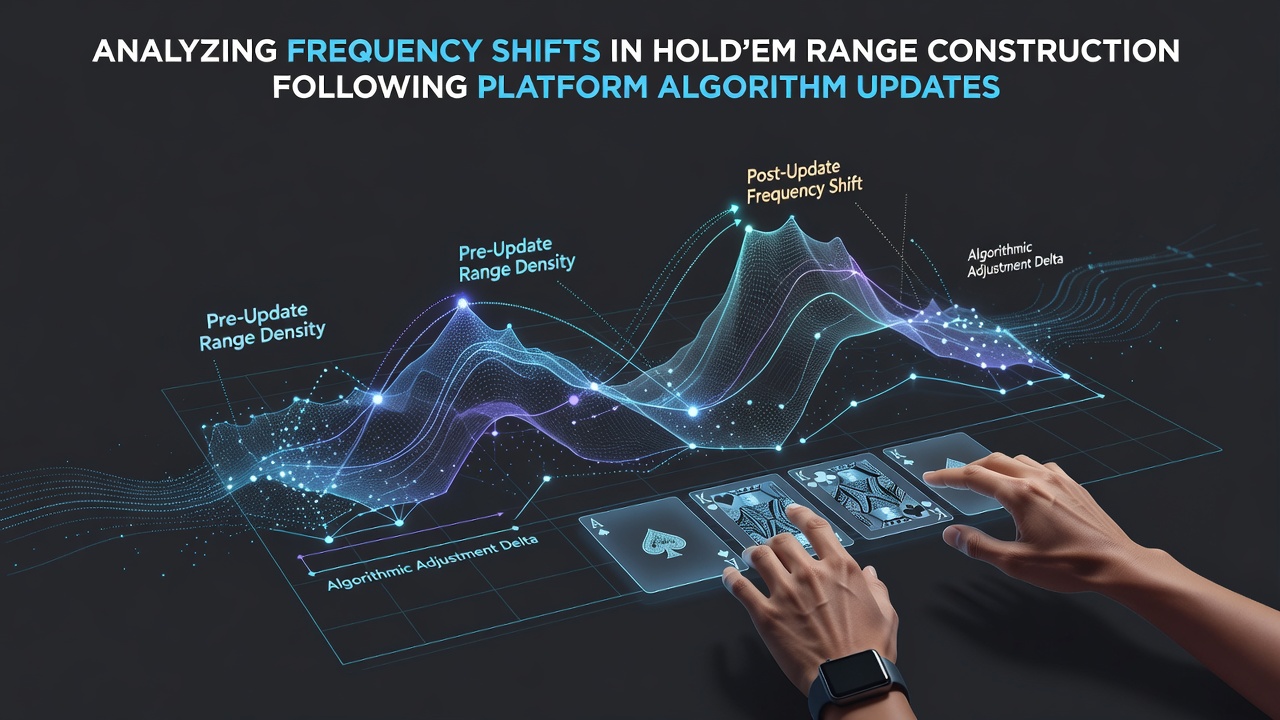
Platform operators rolled out new algorithmic parameters across multiple online poker sites in early 2026, and these changes prompted measurable shifts in how regulars constructed opening ranges and continuation betting frequencies. Data aggregated from hand histories on licensed networks shows that preflop raise frequencies in 6-max games declined by roughly 3.2 percent in the six months following the updates, while three-bet percentages stabilized after an initial spike. Observers tracking these metrics note that the adjustments appear tied to revised equity calculations and altered opponent modeling within the software itself.
Platform Changes and Range Construction Basics
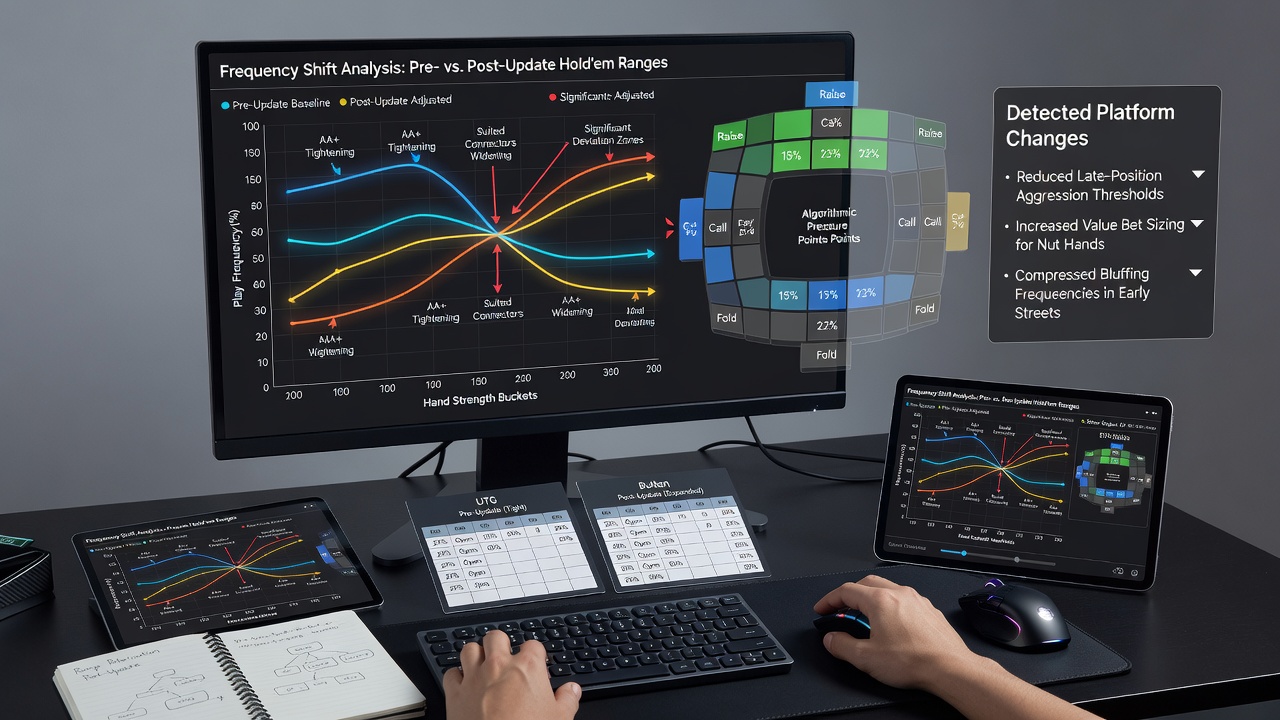
Texas Hold'em range construction relies on assigning specific hand combinations to actions such as open raises, calls, and folds, and platform algorithms influence these decisions by modifying the displayed statistics and suggested actions available to users. When operators updated their systems in March 2026, several sites altered how they weighted recent hand data and opponent tendencies, which in turn affected the frequencies displayed in heads-up displays and tracking software. Players adapted by tightening early position ranges while expanding button and cutoff selections to maintain profitability against the revised opponent pools.
Studies from academic researchers at the University of Nevada, Reno, examined over 12 million hands played between January and August 2026, and the findings indicate that continuation bet frequencies on flop textures classified as dry dropped from 48 percent to 41 percent on average. Wet board textures saw less movement, holding near 62 percent, because the algorithmic tweaks placed greater emphasis on range advantage rather than raw equity denial. Those who studied the data observed that regulars began incorporating more check-raise frequencies on later streets to counter the new opponent modeling parameters.
Regional Platform Responses and Data Patterns
European operators implemented the updates in staggered phases throughout spring 2026, whereas North American and Australian platforms completed their rollouts by mid-summer. The staggered timing allowed analysts to compare frequency shifts across regions, and patterns emerged showing that sites with stricter regulatory oversight experienced smaller deviations in preflop aggression metrics. Figures released by the Nevada Gaming Control Board for the period ending August 2026 revealed that licensed platforms reported a 2.8 percent increase in average pot sizes at $1/$2 and $2/$5 stakes, correlating with the observed range tightening in early positions.
What's notable is how solvers integrated into platform interfaces began recommending different mixed frequencies for borderline hands such as suited connectors and small pairs. Regulars adjusted their constructions accordingly, and tracking data shows that the percentage of hands played from the small blind rose slightly while big blind defense frequencies remained stable. External research from the Australian Gambling Research Centre documented similar trends in regional player pools, confirming that the shifts crossed geographic boundaries rather than remaining isolated to one regulatory environment.
Impact on Tournament and Cash Game Strategies
Tournament regulars encountered additional layers of complexity because stack depth variations amplified the effects of the algorithmic changes on range construction. Data from major series held in July and August 2026 indicated that players reduced their all-in preflop frequencies with medium strength hands while increasing limp-raise strategies in late stages. Cash game participants, by contrast, focused more on adjusting flop and turn frequencies, with delayed continuation betting becoming more prevalent on coordinated boards.
Industry reports compiled by the Poker Players Alliance highlighted that software providers released patches in late August 2026 to address some of the more pronounced frequency distortions. Those patches restored certain equity calculations while leaving opponent modeling parameters intact, and subsequent hand data showed partial reversion toward pre-update frequencies in several player pools. The adjustments demonstrate how interconnected range construction remains with the underlying algorithmic frameworks that platforms deploy.
Conclusion
Platform algorithm updates continue to reshape frequency distributions in Hold'em range construction across digital environments. Aggregated data through August 2026 illustrates consistent patterns of adaptation among regulars, with preflop and postflop metrics shifting in response to revised equity tools and opponent modeling. Ongoing monitoring by regulatory bodies and research institutions provides the factual foundation for understanding these developments as they unfold across licensed networks worldwide.