Patterns in Multiplayer Pots: Aggression Shifts Across Global Pot-Limit Omaha Networks
Sofia Lorenz · Aug 12, 2026

Patterns in Multiplayer Pots: Aggression Shifts Across Global Pot-Limit Omaha Networks
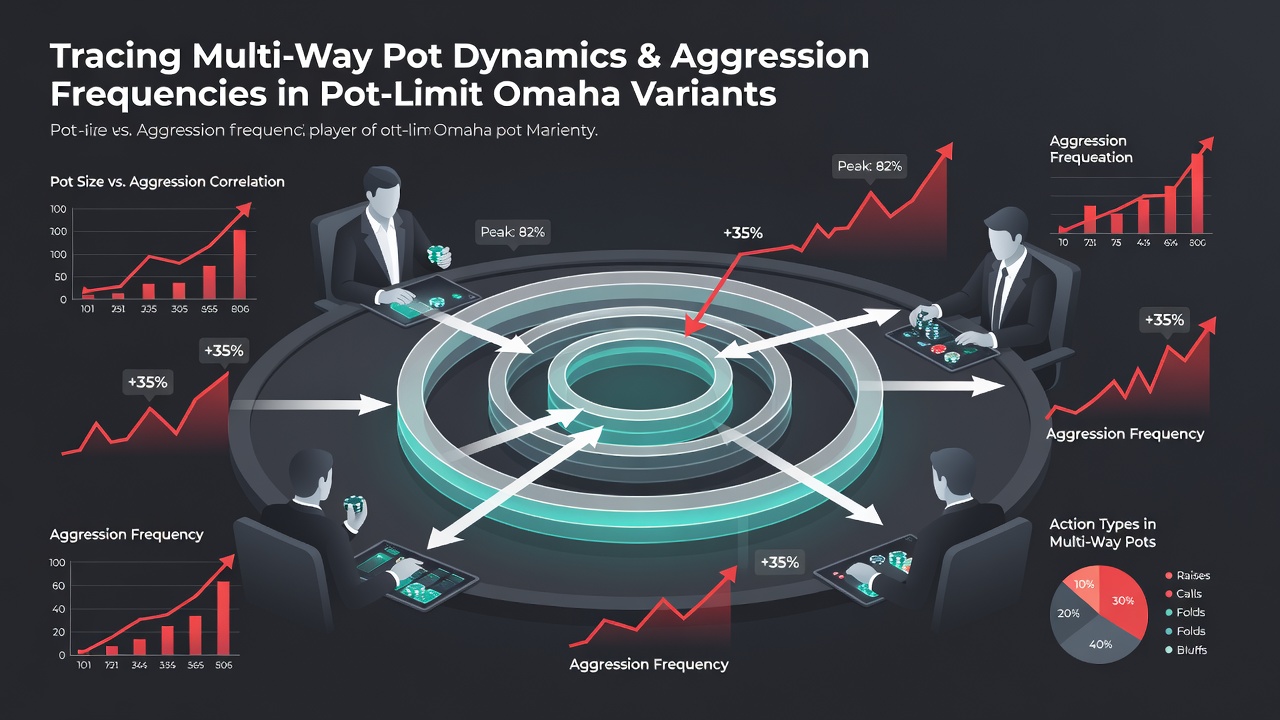
Multi-way pot dynamics in pot-limit Omaha create distinct pressure points that reshape how often players choose aggressive lines, and platforms operating across borders have supplied hand records that let analysts track those shifts in real time. Data aggregated from licensed networks shows that when three or more participants see a flop the frequency of continuation bets drops by measurable margins compared with heads-up situations, while raise frequencies after the flop rise in specific variants that allow for deeper stacks. Observers note that these patterns hold steady across different time zones and player pools, yet they vary when stakes increase or when certain rule tweaks such as shorter effective stacks come into play.
Core Mechanics Driving the Numbers
Pot-limit Omaha rewards hand construction that can survive multiple opponents, which means players adjust their aggression thresholds once the pot grows beyond two participants. Researchers tracking international digital rooms have documented that three-bet percentages climb in early position when the table average exceeds three players, because the wider range of possible holdings forces earlier protection of made hands. Meanwhile post-flop aggression, measured through combined bet and raise rates, declines in the same multi-way environments because equity realization becomes more contested and the cost of multiple streets of action compounds quickly.
Platforms serving European, Asian, and North American markets have released anonymized data sets that confirm these tendencies remain consistent even when player pools rotate seasonally. Figures from the first half of 2026 indicate that aggression frequencies in four-way pots sit roughly 12 to 15 percent lower than in heads-up pots on the same networks, while five-way and larger pots push that gap wider still. The effect appears most pronounced on sites that host mixed-game rotations where PLO sessions often follow hold'em, because players carry over different default aggression levels from one variant to the next.
Regional Platform Variations and Data Sources
International networks differ in how they structure PLO variants, and those structural choices influence the aggression metrics observers record. Rooms operating under Canadian provincial oversight, for instance, publish quarterly summaries that separate multi-way outcomes by stack depth, while Australian state regulators require operators to flag tables with unusually high multi-way frequency for compliance reviews. Alcohol and Gaming Commission of Ontario reports highlight that deeper-stack PLO variants produce steadier post-flop raise rates once three or more players contest the pot, whereas shorter-stack formats see aggression cluster more heavily on the flop and then taper.
One study released by a European research consortium examined more than 2.3 million hands across twelve networks and found that the presence of recreational players in multi-way pots correlates with a measurable uptick in delayed aggression on the turn, as regulars wait for clearer information before committing larger portions of their stacks. The same dataset showed that when recreational volume spikes during evening hours in one region, teh aggression dip in multi-way pots becomes steeper, suggesting that regulars tighten their ranges and reduce bluffs when uncertainty rises.
August 2026 Platform Updates and Measurement Tools
August 2026 brought software refreshes on several major networks that added granular filters for multi-way pot tracking, allowing players and analysts to isolate aggression frequencies by exact player count rather than broad categories. Those updates coincided with expanded hand-history exports that now tag each street with stack-to-pot ratios, giving researchers clearer visibility into how aggression adjusts when effective stacks fall below certain thresholds in four-way or five-way pots. Early returns from the updated tools indicate that the aggression drop in multi-way pots remains stable even after the interface changes, suggesting the behavioral patterns are rooted in game theory rather than display preferences.
Industry groups such as the International Association of Gaming Regulators have encouraged operators to share aggregated aggression data with academic partners, and preliminary comparisons between North American and Asian market rooms show only minor regional deviations once player volume and stake levels are controlled for. The consistency across borders points to structural features of pot-limit Omaha itself, where the four-card starting hands create wide equity distributions that punish indiscriminate aggression once multiple opponents remain.
Conclusion
Hand records from international digital networks continue to supply the clearest window into how multi-way pot dynamics alter aggression frequencies in pot-limit Omaha variants, and the patterns hold across regulatory environments and player-pool compositions. Continued refinements in tracking tools scheduled for late 2026 should further clarify the precise thresholds at which additional opponents trigger measurable shifts in betting and raising rates, giving both recreational participants and serious students of the game a more precise map of the landscape.