Regional Tribal Festivals Highlight Equity Challenges in Omaha Hi-Lo Variants
Noah Schwarz · Aug 15, 2026
Regional Tribal Festivals Highlight Equity Challenges in Omaha Hi-Lo Variants
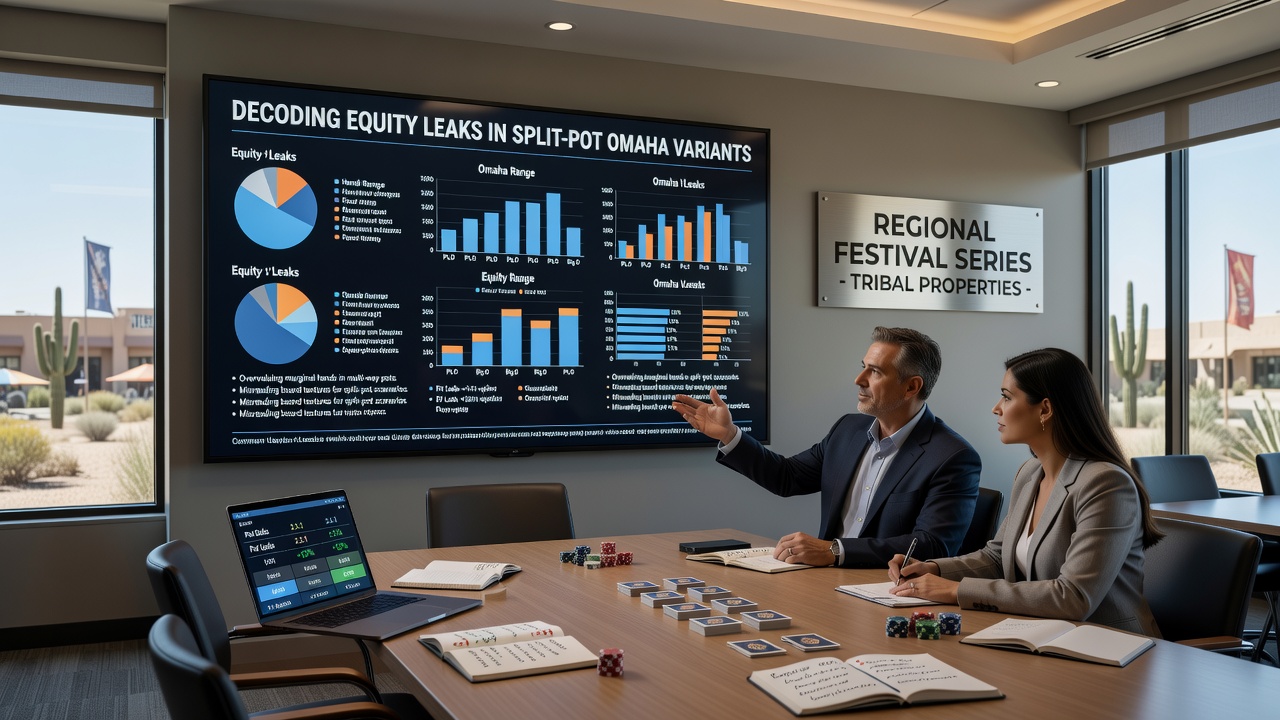
Regional festival series at tribal properties have become central venues for split-pot Omaha variants, where participants encounter structured events that test hand equity across multiple streets. Data from recent cycles shows increased participation in Omaha Hi-Lo formats during summer months, with August 2026 slated for several mid-tier circuits across the Midwest and Southwest regions. Observers note that these gatherings draw both local regulars and traveling players, creating environments where equity calculations shift under varying stack depths and payout pressures.
Core Mechanics of Equity in Split-Pot Formats
Split-pot Omaha variants require simultaneous evaluation of high and low hands, and equity leaks often surface when players misallocate resources toward one side of the pot without securing the other. Research indicates that common leaks include overcommitting on nut-low draws that fail to materialize against paired boards or ignoring reverse equity situations where a strong high hand shares the pot with an opponent holding the same low. Those who track hand histories at tribal venues report that multiway pots amplify these issues, since equity percentages drop faster when additional players remain active through the turn and river.
Studies from industry analysts reveal that festival structures with shorter blind levels encourage earlier aggression, which can expose equity shortfalls when participants enter pots without balanced ranges. In contrast, deeper structures allow more post-flop maneuvering yet still produce leaks when players fail to adjust for changing stack-to-pot ratios. According to aggregated reports from licensed card rooms, equity realization rates in Omaha Hi-Lo decline noticeably once fields exceed 150 entrants, a threshold frequently crossed during regional series at tribal properties.
Patterns Observed During Festival Play
Festival environments introduce variables that standard cash-game analysis does not always capture, including altered table dynamics from unfamiliar opponents and compressed schedules that limit recovery time between events. People who review hand records note that equity leaks appear most consistently in three specific scenarios: continuation betting into multiway low boards without nut protection, calling river bets with second-nut lows that face frequent chops, and overvaluing high-only hands in pots where low possibilities remain live. These patterns repeat across multiple tribal festival stops, suggesting structural rather than location-specific causes.
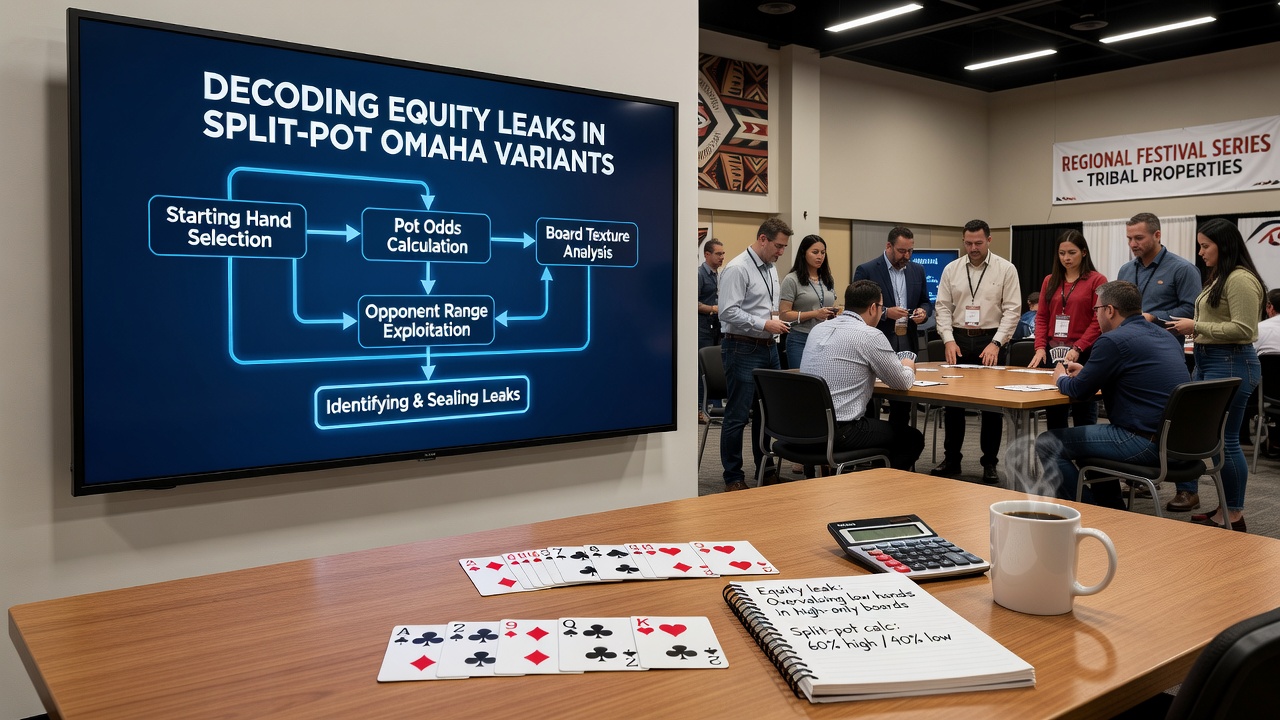
Figures from tournament tracking services show that players who maintain separate equity tracking for high and low components reduce their exposure to these leaks over repeated festival appearances. One documented case involved a series at a Southwestern tribal property where participants using real-time equity software improved their average return by adjusting river decisions on coordinated boards. Such adjustments align with broader data compiled by the National Indian Gaming Commission, which monitors volume and format trends at tribal facilities without regulating individual strategy outcomes.
Impact of Structure and Schedule on Decision Making
Daily tournament structures at these festivals often feature progressive knockouts or bounty elements layered onto Omaha Hi-Lo, further complicating equity assessments. When bounties enter the equation, players sometimes pursue marginal high hands that carry negative expected value once the low component is factored in. Evidence from multiple 2025-2026 cycles demonstrates that late-registration periods create short-stack dynamics where equity calculations must incorporate push-fold thresholds that differ from standard deep-stack play.
Industry organizations such as the Poker Players Alliance have compiled reports indicating that regional series produce measurable shifts in average equity realization compared with standalone weekly tournaments at the same venues. These shifts stem from increased variance in player pools rather than changes in game rules, and they persist even when identical blind structures are used. Observers tracking performance metrics note that players who adapt ranges early in festival weeks maintain steadier equity retention through the latter stages.
Conclusion
Equity management in split-pot Omaha during tribal festival series reflects an intersection of format mechanics, schedule compression, and player pool composition. Data compiled across multiple properties shows consistent leak points that repeat regardless of specific location, while adjustments in range construction and river decision frameworks correlate with improved outcomes in tracked samples. As August 2026 approaches with new festival dates on tribal calendars, participants continue to refine methods for identifying and addressing equity shortfalls within these structured environments.