Software-Driven Range Refinement Techniques Expanding Among Digital Poker Regulars
Willa Keller · Aug 19, 2026
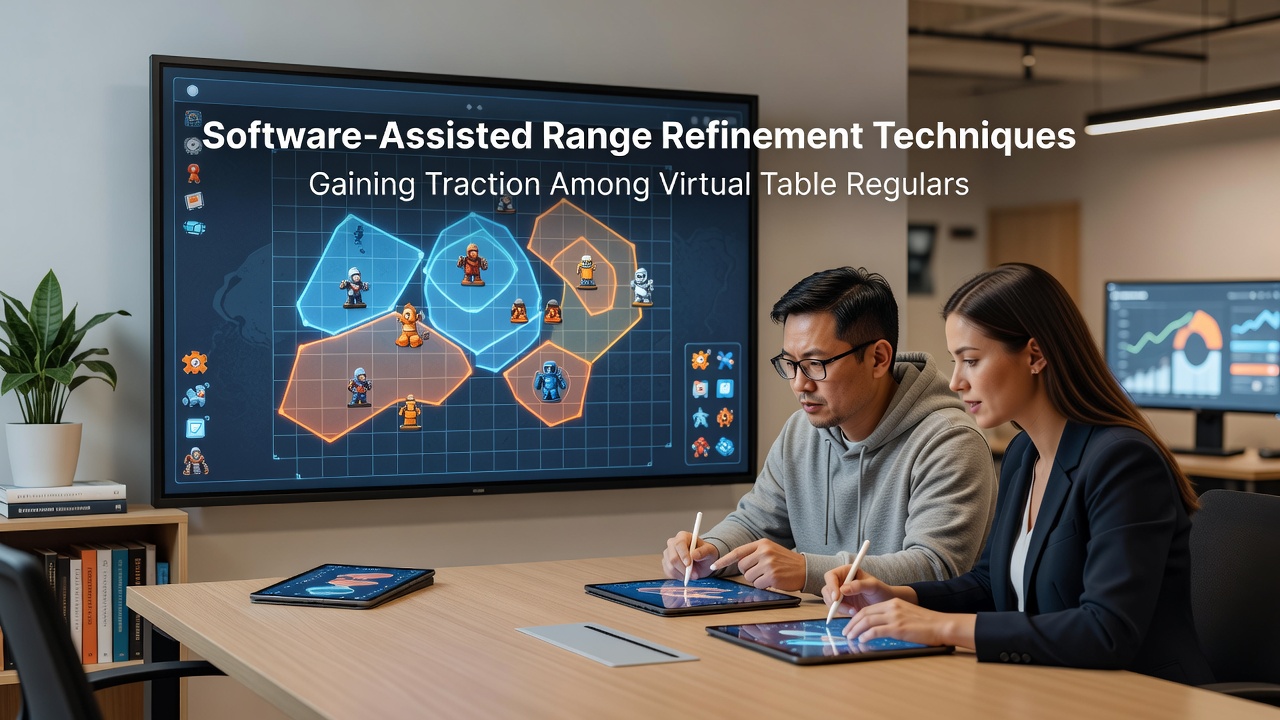
Software-Driven Range Refinement Techniques Expanding Among Digital Poker Regulars
Data from August 2026 shows rising adoption of specialized software among players at licensed online card rooms, where tools for refining hand ranges integrate solver outputs with real-time session data to adjust opening, calling, and three-betting frequencies across different stack depths and tournament stages. Observers note that these platforms allow users to import hand histories from sites operating under regulatory frameworks in multiple jurisdictions, then generate updated range matrices that account for opponent tendencies derived from aggregated databases.
Core Components of Range Refinement Software
Modern applications combine game-theoretic optimal solvers with custom scripting modules that process millions of simulated hands, and players at virtual tables often upload filtered subsets of their own histories to isolate spots where deviations from baseline ranges occur most frequently. Researchers at academic institutions in Canada have documented how these systems recalibrate equity calculations when variables such as rake structures or blind levels shift, while industry reports from the European Gaming and Betting Association highlight parallel growth in subscription-based services that deliver weekly range updates tailored to specific game formats. Those who operate in high-volume environments frequently combine multiple data streams, merging solver-derived GTO ranges with population statistics pulled from tracking databases that cover both cash games and progressive knockout tournaments.
Integration with Existing Tracking Platforms
Many regulars now link their refinement tools directly to HUD overlays that display dynamic range visuals during play, and this connectivity reduces the time required to adjust preflop charts when facing new opponents or when moving between different stake levels. Figures released by Australian regulatory bodies indicate that sessions conducted on platforms with verified hand-history exports have seen measurable increases in software-assisted adjustments, particularly in multi-table scenarios where cognitive load limits manual recall of range boundaries. One documented workflow involves exporting filtered data from a session, feeding it into a range builder module that highlights over-folding or over-bluffing frequencies, and then importing the revised ranges back into training software for targeted drills before the next scheduled playing block.

Regional Patterns in Tool Adoption
Patterns emerging across North American and European markets reveal that players transitioning from live card rooms to fully digital environments rely more heavily on these refinement systems to compensate for the absence of physical tells, and licensing data from state gaming commissions in the United States shows corresponding growth in the number of approved software vendors offering API connections to regulated poker networks. Experts tracking performance metrics report that users who maintain consistent update cycles for their personal range libraries achieve tighter alignment between theoretical outputs and observed results, especially in formats where independent chip model calculations influence late-stage decisions. The same datasets indicate that adoption rates accelerate during periods when new game variants or modified payout structures appear on major platforms, prompting rapid recalibration of continuation-betting and check-raising ranges across different board textures.
Training and Validation Workflows
Validation routines built into current software packages compare user-generated ranges against large-scale simulation outputs, flagging spots where manual overrides produce statistically significant equity leaks, and community forums hosted by industry organizations document shared libraries of pre-built scenarios that regulars import to accelerate onboarding. Those who participate in cohort studies organized by university research groups have supplied anonymized range files that demonstrate measurable convergence toward solver-recommended frequencies after sustained use of refinement modules. August 2026 telemetry from several licensed operators further reveals that sessions incorporating software-guided range reviews before and after play correlate with reduced variance in hourly win rates when measured across thousands of hands.
Future Trajectory and Platform Developments
Platform developers continue to embed machine-learning layers that predict opponent range adjustments based on recent action sequences, and these predictive features feed directly back into the refinement engines used by virtual table regulars. Regulatory updates scheduled for later in 2026 are expected to standardize data export formats across additional jurisdictions, which should streamline the import processes that currently require custom parsing scripts for certain networks. Observers tracking these developments note that the combination of solver precision, historical data filtering, and real-time visualization tools creates a closed feedback loop that supports ongoing calibration without requiring players to maintain separate spreadsheets or manual notation systems.
Conclusion
Software-assisted range refinement has moved from niche experimentation to routine practice at virtual tables as data access adn processing capabilities expand, and the integration of solver outputs with live session tracking continues to shape how regulars construct and update their strategic baselines across multiple formats and jurisdictions.